
 05 July 2022
The Future of Farming: How Smart Irrigation Solutions Are Transforming Agriculture
Water is one of the most valuable resources in agriculture. As climate patterns become less predictable and the demand for food continues to grow, farmers are looking for innovative ways to produce more while using fewer resources. Smart irrigation is emerging as one of the most effective solutions, helping farmers improve crop yields, conserve water, and build more resilient farming systems.
At TELIOS Fresh, we recognize that sustainable farming begins with responsible resource management. By embracing modern irrigation practices, farmers can grow healthier crops, reduce operational costs, and ensure consistent production throughout the year.
Why Irrigation Matters
Rain-fed agriculture has supported farming for generations, but changing weather patterns have made rainfall increasingly unreliable. Extended dry spells, delayed rainy seasons, and uneven rainfall distribution can significantly affect crop growth and harvest quality.
Irrigation provides farmers with greater control over water supply, ensuring crops receive the moisture they need at the right time. This stability leads to healthier plants, improved yields, and more predictable harvests.
What Is Smart Irrigation?
Smart irrigation uses technology to apply water more efficiently based on the actual needs of crops rather than fixed schedules. Instead of watering fields uniformly, smart systems consider factors such as soil moisture, weather conditions, crop type, and stage of growth.
The goal is simple: provide the right amount of water at the right time while minimizing waste.
Modern Irrigation Technologies
Today’s farmers have access to a variety of irrigation solutions designed to improve efficiency and productivity.
Drip Irrigation
Drip irrigation delivers water directly to the root zone through a network of pipes and emitters. This method minimizes evaporation and runoff while ensuring plants receive consistent moisture where it is needed most.
It is particularly effective for vegetables, fruit orchards, herbs, and greenhouse production.
Sprinkler Irrigation
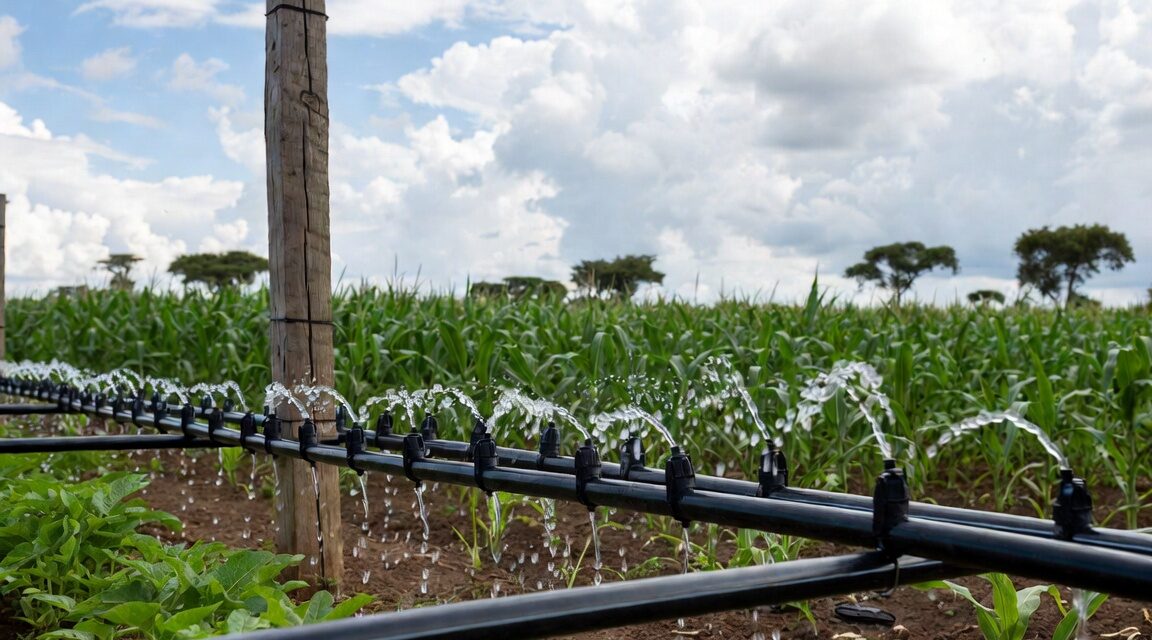
Sprinkler systems distribute water evenly across crops, making them suitable for a wide range of farming operations. Modern sprinkler systems can be adjusted to suit different crop types and field conditions.
Soil Moisture Sensors
These sensors measure the amount of water available in the soil, allowing farmers to irrigate only when necessary. This prevents both overwatering and underwatering, improving plant health and conserving water.
Weather-Based Irrigation Controllers
Advanced irrigation controllers use local weather data to automatically adjust watering schedules based on rainfall, temperature, humidity, and evaporation rates.
This ensures crops receive appropriate irrigation without unnecessary water use.
Automated Irrigation Systems
Automation allows irrigation systems to operate with minimal manual intervention. Timers, remote monitoring, and mobile applications enable farmers to manage irrigation efficiently, even when away from the farm.
Benefits of Smart Irrigation
Improved Crop Yields
Healthy crops require consistent access to water throughout their growth cycle. Smart irrigation helps maintain optimal growing conditions, resulting in better-quality produce and higher yields.
Water Conservation
Efficient irrigation significantly reduces water wastage by delivering water only where and when it is needed. This is increasingly important in regions where water resources are under pressure.
Reduced Production Costs
By minimizing water usage and reducing labor requirements through automation, farmers can lower operating costs while maintaining productivity.
Better Produce Quality
Proper irrigation supports uniform crop development, leading to fruits and vegetables with better size, appearance, texture, and shelf life.
Increased Climate Resilience
Modern irrigation systems help farmers adapt to changing weather conditions by reducing dependence on unpredictable rainfall.
Smart Irrigation and Sustainable Agriculture
Sustainability is becoming a key priority for modern agriculture. Efficient water management helps protect rivers, groundwater resources, and surrounding ecosystems while supporting long-term food production.
Smart irrigation also reduces soil erosion, minimizes nutrient loss, and encourages healthier root development, contributing to more sustainable farming practices.
For businesses and consumers, sustainably grown produce reflects a commitment to environmental responsibility and food security.
Supporting Farmers Through Innovation
Technology is no longer reserved for large commercial farms. Many smart irrigation solutions are becoming more affordable and accessible, allowing smallholder farmers to improve productivity and reduce risk.
As these technologies continue to evolve, they will play an increasingly important role in strengthening Kenya’s horticultural sector and supporting farming communities across the country.
TELIOS Fresh’s Commitment to Modern Farming
At TELIOS Fresh, we believe that the future of agriculture lies in combining traditional farming knowledge with modern technology.
Through responsible water management, sustainable farming practices, and collaboration with local growers, we are committed to producing premium-quality fresh produce while protecting the natural resources that make agriculture possible.
By embracing innovation today, we are helping build a more resilient and sustainable food system for tomorrow.
Looking Ahead
The future of farming will be shaped by efficiency, sustainability, and innovation. Smart irrigation is more than a technological upgrade—it is an investment in better harvests, responsible water use, and long-term agricultural success.
Whether on our own farms or through partnerships with local growers, TELIOS Fresh remains committed to adopting practices that improve productivity, support farming communities, and deliver fresh, high-quality produce to customers across Kenya and beyond.
As agriculture continues to evolve, smart irrigation will remain at the heart of growing more with less—ensuring that every drop of water contributes to a healthier crop, a stronger farm, and a more sustainable future.